What are the advantages and disadvantages of NiMH batteries?
First time I completely mismanaged a NiMH (Nickel-Metal Hydride) battery bank for an off-grid security camera setup. I assumed it would behave just like the lead-acid and lithium-ion cells I work with daily in the garage.
Within three months, the system was dead, suffering from severe voltage depression and memory effect. I learned the hard way that understanding the nuances of NiMH chemistry is the difference between a reliable backup system and an expensive pile of recycling.
Whether you are designing a solar backup system, troubleshooting power tool battery packs, or setting up a reliable amateur radio station, knowing the advantages and disadvantages of NiMH batteries is crucial for making informed, cost-effective decisions.
Let’s dive into the practical realities of this technology, how it compares to alternatives, and how to maximize its lifespan in the real world.
Understanding NiMH Batteries: Core Mechanics and Use Cases
ShutterstockExplore
What It Is and How It Works
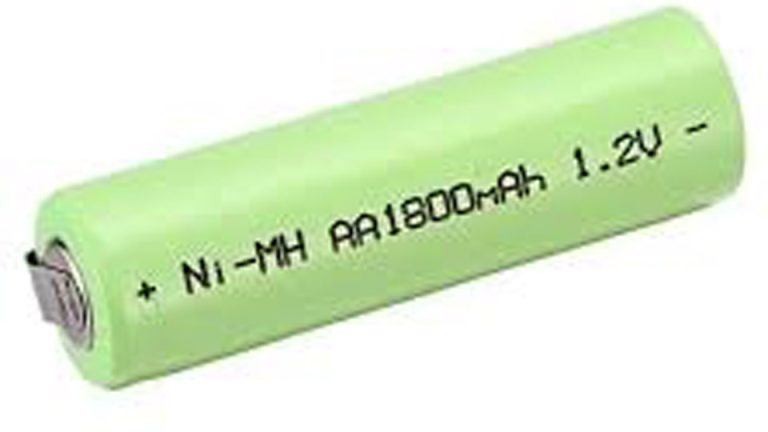
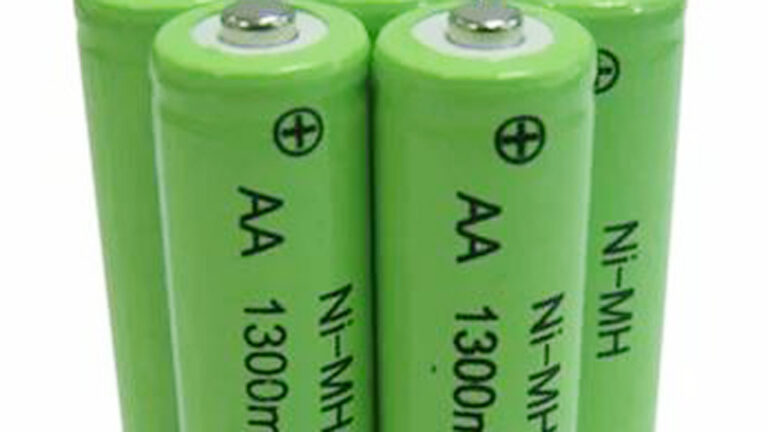
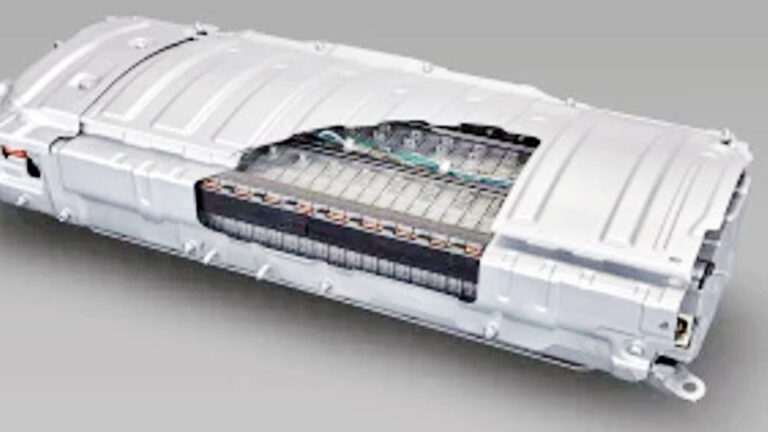
A Nickel-Metal Hydride (NiMH) battery is a secondary (rechargeable) battery that uses a positive electrode of nickel hydroxide and a negative electrode of a hydrogen-absorbing alloy.
Unlike older Nickel-Cadmium (NiCd) batteries, NiMH technology provides significantly higher energy density without using toxic heavy metals.
The chemical reaction during discharge involves the oxidation of the metal hydride at the negative electrode and the reduction of nickel oxyhydroxide at the positive electrode.
Nominal Voltage and Capacity
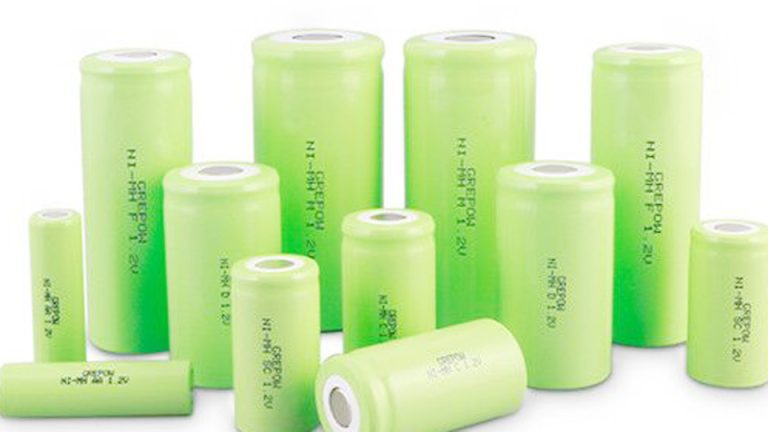
- Nominal Voltage: 1.2V per cell (compared to 1.5V for standard alkaline, 3.2V for LiFePO4, or 3.6V/3.7V for standard lithium-ion).
- Capacity Range: Typically between 1,000 mAh and 2,800 mAh for standard AA sizes.
Field Note: Because a four-cell NiMH pack in series outputs 4.8V rather than the 6.0V of a typical alkaline pack, many devices designed for disposable batteries will report a “low battery” warning earlier than necessary.
When and Why It Should Be Used
NiMH batteries excel in high-drain, frequently used portable electronics such as camera flashes, walkie-talkies, medical devices, and children’s toys.
Because they maintain a relatively flat discharge curve, they keep devices running at a steady voltage until they are nearly depleted.
Advantages of NiMH Batteries
Understanding the practical, operational benefits of NiMH technology helps clarify why it remains an industry staple despite the rise of lithium-ion cells.
+------------------------------------+------------------------------------+
| ADVANTAGE                          | PRACTICAL REAL-WORLD BENEFIT       |
+------------------------------------+------------------------------------+
| Superior Safety Profile            | Non-flammable, thermal runaway     |
|                                    | risk is nearly non-existent.       |
+------------------------------------+------------------------------------+
| Low Environmental Impact           | Contains no toxic cadmium or       |
|                                    | lead; fully recyclable.            |
+------------------------------------+------------------------------------+
| Excellent Cold-Weather Performance | Outperforms lithium-ion in         |
|                                    | sub-zero conditions.               |
+------------------------------------+------------------------------------+
| High Discharge Current             | Can dump power quickly without     |
|                                    | voltage drop or cell damage.       |
+------------------------------------+------------------------------------+
1. High Safety and Thermal Stability
Unlike lithium-based cells, NiMH batteries do not contain volatile organic electrolytes.
If you accidentally short-circuit a NiMH cell, it may become warm or vent gas, but it will not undergo thermal runaway or catch fire.
Real-World Application
For households with young children, or for devices left unattended in a hot car or a freezing garage, NiMH offers a high safety margin.
2. Environmental and Lifecycle Value
NiMH chemistry relies on relatively abundant materials and avoids the disposal issues associated with lead, cadmium, or cobalt.
When treated well, low-self-discharge (LSD) NiMH batteries can endure up to 1,000 to 2,100 charge/discharge cycles.
3. Predictable Voltage Curve Under Load
The cell voltage remains stable throughout most of the discharge cycle, dropping off sharply at the end.
This predictability is ideal for DIY mechanics using multimeters or technicians calibrating field instruments.
Disadvantages of NiMH Batteries
No battery technology is a silver bullet. NiMH has distinct operational limitations that can ruin your equipment if misunderstood.
1. The Self-Discharge Phenomenon
Standard NiMH batteries lose anywhere from 1% to 5% of their charge per day at room temperature, even when disconnected from any load.
The Fix: Use LSD NiMH (Low-Self-Discharge) batteries, such as Panasonic Eneloop cells, which retain up to 70% of their charge after one year of storage.
2. Sensitivity to Overcharging
Charging a NiMH battery incorrectly is the fastest way to ruin it.
Because NiMH cells do not have a simple voltage-based cutoff profile that works universally, chargers must use delta-peak voltage detection or temperature sensing to terminate the charge cycle.
Real-World Mistake
Using an old, unregulated “dumb” wall charger that trickles current indefinitely will overheat the battery and degrade the electrode separators.
3. The “Memory Effect” and Voltage Depression
While much less severe than with older NiCd batteries, NiMH cells can still experience voltage depression if repeatedly shallow-cycled (e.g., used for 10% of their capacity and then fully recharged).
How to fix it: Perform a deep discharge and complete recharge cycle using an intelligent diagnostic charger once every few months to “exercise” the chemistry.
Comparing Battery Technologies: Which Should You Choose?
To give you a clearer idea of where NiMH stands in comparison to other chemistries, review the table below.
| Technology | Nominal Voltage | Lifespan (Cycles) | Ideal Operating Environment | Typical Weakness |
| NiMH | 1.2V | 500 – 2,100 | Moderate to low temps, high drain | High self-discharge, lower voltage |
| Lead-Acid / AGM | 12V (Nominal) | 300 – 800 | Heavy stationary loads, backup power | Heavy, sulfation, low depth-of-discharge |
| Lithium-Ion (NMC) | 3.6V | 500 – 1,500 | Consumer electronics, tools | Fire risk, strict BMS requirements |
| LiFePO4 | 3.2V | 2,000 – 5,000 | Solar setups, off-grid storage | High upfront cost, low temp charging limits |
| Alkaline | 1.5V | Single-use | Low drain, long storage | Leaks electrolyte, non-rechargeable |
Hands-On Maintenance and Diagnostic Procedures
Proper maintenance determines whether your NiMH battery bank lasts for one year or ten. Let’s look at field-tested maintenance steps.
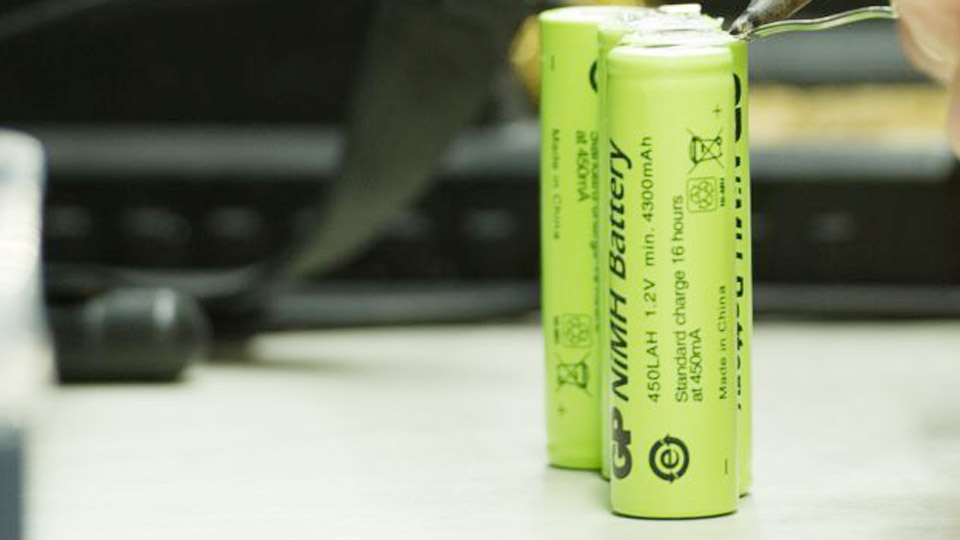
Image by custompower
Step-by-Step Guide: Testing NiMH Voltage and Internal Resistance
If your NiMH batteries are failing to hold a charge, you can test and restore them with the following diagnostic method:
Resting Voltage Test: Let the battery sit undisturbed for 24 hours after a full charge. A healthy AA cell should measure approximately 1.28V to 1.35V. A cell measuring below 1.18V under no load is showing signs of high internal resistance or permanent degradation.
Internal Resistance Measurement: Using a dedicated battery analyzer (such as an Opus BT-C3100 or an equivalent multi-chemistry charger), measure the internal resistance ($IR$). An $IR$ reading over $100\,\text{m}\Omega$ indicates an older, high-impedance cell that will struggle in high-drain devices.
Conditioning Cycle: Place the cell in a smart charger and select the Refresh/Discharge mode. The charger will drain the battery down to exactly 0.9V, measure the discharge capacity, and slowly recharge it. Repeat this cycle up to three times to revive slightly degraded batteries.
Charging Guidelines
Standard Charging Rate: Charge at $0.1C$ (where $C$ is the rated capacity of the battery) for 14 to 16 hours. For a 2000 mAh battery, this equates to a 200 mA current.
Fast Charging Rate: Ensure your intelligent charger uses a temperature sensor and a $-\Delta V$ (negative delta voltage) detection method to cut off the current when the battery is full.
Real-World Usage Scenarios
1. Solar and Off-Grid Backup Systems
In off-grid systems, large NiMH cell arrays are sometimes configured to run low-power monitoring circuits or low-voltage LED lights.
The Problem: Solar charge controllers are optimized for 12V or 24V lead-acid or lithium battery banks and will destroy NiMH batteries if connected directly.
The Solution: Always route your solar charge controller to a DC-DC step-down converter or a custom battery management PCB designed for low-voltage nickel-based chemistries.
2. Automotive and Motorcycle Applications
You should never use NiMH batteries for starting an internal combustion engine (which requires hundreds of cold-cranking amps).
However, they are excellent for key fobs, OBD-II diagnostic tools, and portable jump-starter display controllers.
       [ Solar Panel ]
              │
              ▼
    [ Solar Charge Controller ]
              │
              ▼ (Regulated 12V output)
    [ DC-DC Step-Down Converter ]
              │
              ▼ (Regulated 4.8V output)
   [ NiMH Custom Battery Pack ]
Conclusion
The advantages of NiMH batteries—such as their safety profile, non-toxic construction, and cold-weather tolerance—make them difficult to replace in low-voltage, high-current applications.
Conversely, their disadvantages require you to be deliberate about how you charge and store them.
Chemistries: NiMH provides unparalleled safety and cycle life for consumer-grade applications, while chemistries like LiFePO4 remain the gold standard for high-capacity stationary solar.
Charging Methods: Always match your charger’s current output to the battery capacity and ensure it has an automated shutoff.
Common Mistakes: Avoid using standard “dumb” chargers that overcharge and heat up the cells, leading to electrolyte venting and early failure.
Expert Technician Tip
When building a custom 4-cell or 8-cell NiMH pack, never mix cells from different manufacturers or batches. Even a slight variation in internal resistance will cause one cell to reverse polarity during heavy discharge, destroying the entire pack. Always use matched cells from the same production run.
Frequently Asked Questions
Can I replace a standard alkaline battery with a NiMH battery?
Yes, but you must account for voltage differences. A NiMH battery outputs 1.2V, whereas an alkaline battery outputs 1.5V. While most modern devices are designed to handle this lower voltage, some high-drain devices may report a low battery state prematurely.
Why do my NiMH batteries lose their charge so quickly in storage?
Standard NiMH batteries have a high self-discharge rate (up to 5% per day). To prevent this, switch to Low-Self-Discharge (LSD) batteries like Eneloop, which can sit in storage for months without going flat.
How do I revive dead NiMH batteries?
If a battery has sat unused and its voltage has dropped below 0.9V, standard smart chargers may refuse to detect it. Place the battery in a basic, un-regulated charger for 30 to 60 minutes to “wake up” the chemistry and bring the voltage above 1.0V. Then, transfer it to an intelligent charger to complete a full conditioning cycle.
How long does a NiMH battery last?
Under regular use and proper charging conditions, a good quality NiMH battery will last for 500 to 1,000 charge cycles, which equates to roughly 3 to 5 years of daily use.