How to Charge an 18V Lithium-Ion Battery Without Charger
Nothing ruins a workday faster than reaching for your drill or impact driver and finding the battery stone dead right when you need it. I’ve had people walk into my workshop asking How to Charge an 18V Lithium-Ion Battery Without Charger because the original charger was lost, damaged, or simply stopped working at the worst possible time.
I get why this matters. A dead battery can delay jobs, waste money, and push people into risky shortcuts that overheat the pack or damage the cells inside. Lithium-ion batteries are powerful and efficient, but they also need the right handling if you want good runtime, safe charging, and long service life.
I’ve tested battery packs that were ruined by cheap adapters, wrong voltage chargers, and guesswork. I’ve also seen perfectly good batteries brought back safely with the right method and a little patience. The difference usually comes down to knowing what works—and what can destroy the pack in minutes.
I’ll walk you through practical ways to charge an 18V battery when the charger isn’t available, what tools you can use, what mistakes to avoid, and how to do it safely without shortening battery life.
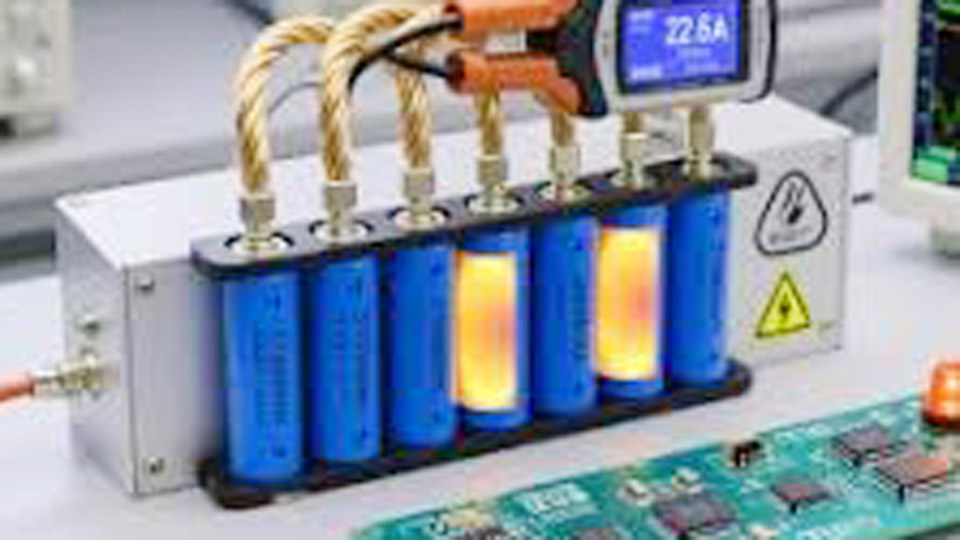
Image by symbobattery
Understanding Your Battery System: The 18V Lithium-Ion Standard
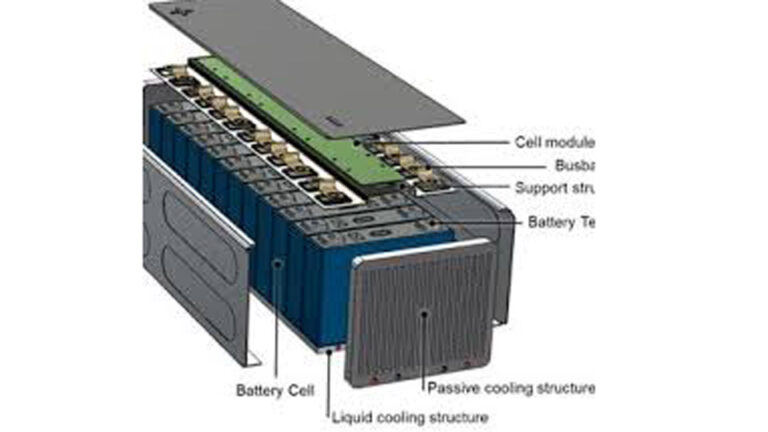
Before connecting any wires or power sources to your battery, it helps to understand exactly what is happening under the plastic casing. An 18V lithium-ion power tool battery or small backup pack is rarely a single cell.
What It Is
An 18V power tool battery pack is composed of multiple individual cylindrical cells (typically the 18650 or 21700 format) connected in series and parallel. A standard 18V (nominal) lithium-ion battery pack consists of 5 cells connected in series, where each cell has a nominal voltage of 3.6V ($5 \times 3.6V = 18V$).
However, the peak or maximum voltage of a fully charged 5-series lithium-ion pack is 21V ($5 \times 4.2V = 21V$). If you are attempting to charge this pack, your voltage source must be able to match or slightly exceed this threshold without exceeding the maximum charging current.
When and Why to Use Emergency Methods
Alternative charging methods are strictly reserved for situations where standard infrastructure is unavailable, such as during field repairs, off-grid power outages, or remote contracting jobs. Using these methods requires manual oversight because standard lithium-ion chargers perform three distinct tasks that manual sources do not:
- Constant Current (CC) delivery
- Constant Voltage (CV) tapering
- Cell-balancing via the internal Battery Management System (BMS)
Pro Tip: Never leave an alternative charging setup unattended. Always monitor the battery and wire temperatures using an infrared thermometer or by touch.
Battery Chemistry Comparison
To understand why lithium-ion systems require distinct charging profiles, it helps to look at how they compare to older or alternative battery chemistries often found in automotive, marine, or UPS storage.
| Chemistry Type | Nominal Cell Voltage | Typical 12V/18V Application | Lifespan (Cycles) | Cost Level | Safety Risk |
| Lead-Acid / AGM | 2.1V per cell | Automotive, UPS, off-grid storage | 300 – 800 | Low | Low (Off-gassing) |
| Gel | 2.1V per cell | Solar backup, marine | 500 – 1,000 | Low to Med | Low |
| Lithium-Ion (NMC/LCO) | 3.6V per cell | Power tools, electric vehicles, laptops | 500 – 1,500 | High | High (Thermal runaway) |
| LiFePO4 | 3.2V per cell | Solar powerwalls, RVs | 2,000 – 5,000 | High | Very Low |
Step-by-Step Guide: How to Charge an 18V Lithium-Ion Battery Without a Charger
When standard charging options are unavailable, there are several methods to safely transfer power. We will explore the three most practical methods: using an adjustable DC bench power supply, utilizing an automotive 12V-to-18V setup, and the temporary “jump-start” method using good cells.
Method 1: Using an Adjustable Bench Power Supply
This is the most technically accurate and safe method if you do not have the proprietary dock charger, as it allows you to control both the voltage and current limits.
What You Need
- Adjustable DC bench power supply (0–30V, 0–5A capacity)
- Alligator clip leads or dedicated probe wires
- Multimeter for verification
- Safety glasses and fire-resistant surface
Step-by-Step Execution
Identify the Terminals: Locate the positive ($+$) and negative ($-$) terminals on your 18V battery pack. Ignore the middle data or thermistor pins for direct charging.
Set the Power Supply: Turn on the bench power supply without connecting it to the battery. Set the voltage limit to 21.0V (representing the peak charge voltage for a 5-series pack) and the current limit (CC) to 0.5C to 1C (for a 2.0Ah battery, set the current to roughly 1.0A–2.0A).
Connect the Leads: Connect the positive alligator clip to the positive terminal of the battery, and the negative clip to the negative terminal. Ensure there is a secure, stable contact.
Monitor the Charge: Turn on the output of the power supply. You will notice the current display at the pre-set limit while the voltage slowly rises. As the battery approaches 21V, the current will begin to drop.
Stop Charging: Once the current drops to less than 10% of the initial charge rate (e.g., drops to 0.1A), or the battery voltage stabilizes at 21V, disconnect the power supply.
+------------------+             +----------------------+
| Bench DC Power   |             | 18V Li-Ion Battery   |
| Supply           | -- (Red) -> | Positive Terminal (+) |
|                  |             |                      |
| Voltage: 21.0V   |             |                      |
| Current: 1.5A    | <-- (Blk) - | Negative Terminal (-) |
+------------------+             +----------------------+
Method 2: The 12V Automotive or Solar Battery Transfer Method
If you are stranded in a vehicle or working off-grid with a solar array, you can use a 12V lead-acid battery or a 12V solar charge controller output to jump-start the voltage in the 18V pack.
What You Need
- 12V vehicle battery, marine battery, or 12V output from a solar inverter
- Connecting wires with small alligator clips
- Step-up boost converter (optional but highly recommended to reach 21V)
- Multimeter
Step-by-Step Execution
Assess the Voltage Drop: If an 18V battery sits below 15V, the internal BMS may trip, preventing the battery from recognizing standard chargers.
Provide a Trickle Charge: Connect the positive terminal of the 12V source to the positive terminal of the 18V battery, and do the same for the negative terminals. Let this sit for 15 to 20 minutes to “wake up” the low-voltage cutoff circuit.
Boost the Charge: Use a step-up (boost) DC-DC converter module connected to the 12V battery. Adjust the output screw on the boost converter until the multimeter reads exactly 21.0V at the output end.
Connect the Boosted Output: Connect the boosted 21V output to the 18V battery terminals for up to one hour, frequently checking the temperature of the battery casing with your hand.
Method 3: Harvesting Power from an Alternative Power Tool Battery
If you have a collection of partially working tool batteries from different brands or models, you can use a healthy battery to pass a charge into a depleted one.
Step-by-Step Execution
Check Voltages: Measure the voltage of the donor battery and the depleted battery. The donor battery must have a higher voltage than the depleted battery.
Parallel Connection: Connect the positive terminals together using copper wire or heavy-gauge leads for 5 to 10 minutes.
Current Limitation: Place a low-amperage automotive fuse or a small resistor (such as a 12V halogen bulb) in series to prevent excessive current flow during the transfer.
Safety and Diagnostic Procedures
Working with high-density energy storage units requires disciplined safety protocols. Let’s look at the diagnostic checks that prevent accidents before they happen.
Identifying Degraded and Swollen Cells
Visual Inspection: If the battery casing shows signs of bulging, cracking, or white powdery salt residue around the vents, do not attempt to charge the battery. The internal cells are compromised.
Internal Resistance Check: Use a dedicated battery impedance tester. Internal resistance values exceeding 50 milliohms per cell indicate advanced degradation and potential failure under high loads.
Voltage Ranges for Common Lithium-Ion States
| Battery State | Voltage per Cell | Total Pack Voltage (5-Series) |
| Fully Discharged (Cut-off) | ~2.5V – 2.8V | 12.5V – 14.0V |
| Storage Voltage (Nominal) | 3.6V – 3.7V | 18.0V |
| Fully Charged | 4.2V | 21.0V |
Real-World Usage Scenarios and Maintenance Practices
Understanding how batteries behave across different devices helps prevent the need for emergency charging.
1. Cars and Motorcycles
When working on vehicle alternators or testing motorcycle lighting, mechanics often rely on 18V power tool batteries to run diagnostic equipment or temporary test lights. Always ensure that the voltage conversion matches the vehicle’s 12V or 24V system to avoid damaging sensitive sensors.
2. Off-Grid Solar Systems
In remote setups, you might use 18V lithium-ion cells as part of a small 12V/24V solar storage bank. Ensure that the solar charge controller is specifically set to the Lithium or User-Defined profile with a maximum charge voltage of 21V for 18V configurations.
3. UPS and Backup Systems
Uninterruptible Power Supplies (UPS) commonly use lead-acid batteries, but technicians frequently replace them with lithium-ion units for better weight-to-power ratios. Ensure that the charge current delivered by the UPS motherboard does not exceed 10A, and verify that the low-voltage cutoff on the UPS matches the lithium battery specs.
Troubleshooting Common Mistakes
Even professionals can make mistakes when working outside a controlled charging environment. Below are the most common charging mistakes and how to fix them.
Mistake: Using Too Much Voltage. Attempting to charge an 18V battery with a 24V or 36V source directly bypasses the BMS safety thresholds, leading to rapid heating and venting of gasses.
Solution: Always use a step-down or strictly regulated power supply matched to the battery’s upper cell limits.
Mistake: Storing Batteries Completely Discharged. Leaving a lithium-ion battery in a depleted state for long periods allows the copper shunts within the cells to degrade, causing an internal short-circuit.
Solution: Always store batteries at a nominal storage voltage (around 3.7V per cell, or ~18.0V to 18.5V for the pack) in a cool, dry environment.
Mistake: Charging in Freezing Temperatures. Charging lithium-ion batteries at or below 0°C (32°F) causes metallic lithium plating to form on the anode, creating a permanent fire hazard.
Solution: Allow cold batteries to warm up to room temperature (above 15°C or 59°F) before connecting them to any charging source.
Conclusion
Knowing how to charge an 18V lithium-ion battery without a charger comes down to understanding cell voltage, maintaining strict current limits, and prioritizing safety. By using the methods outlined in this guide—such as an adjustable bench power supply or a boosted 12V source—you can safely recover dead batteries without compromising performance.
Battery Types: Lithium-ion cells demand precise voltage matching ($5 \times 4.2V = 21V$) to prevent overheating.
Charging Methods: Direct DC power supplies allow manual CC/CV adjustment, whereas lead-acid or parallel transfers require constant monitoring.
Safety: Storing batteries properly and avoiding freezing temperatures will prevent unexpected failures in the field.
Applying these steps correctly keeps your power tools, off-grid appliances, and diagnostic gear running dependably, no matter where your work takes you.
Expert Technician Tip: If the internal BMS trips into “lockout mode” due to over-discharge, standard chargers will not detect the battery. You can “wake up” the BMS by connecting a matching 18V to 21V DC source in parallel for just 10 to 30 seconds, which raises the cell voltage above the minimum threshold, allowing standard chargers to take over.
Frequently Asked Questions
Will using a higher voltage charger damage my 18V battery?
Yes. Supplying more than 21V to a 5-series lithium-ion battery pack causes excessive current and thermal strain, destroying the BMS or the individual cells and creating a significant fire hazard.
How long does an 18V battery take to charge without a charger?
It depends on the current supplied. Using a 1.5A bench power supply to charge a 3.0Ah battery from empty takes approximately 2.5 hours. For safety, this time can vary depending on the battery’s internal resistance.
Why does my battery show zero voltage when tested with a multimeter?
If the battery drops below 2.5V per cell, the internal safety circuitry trips to protect the battery, making the terminals read zero volts. A “wake-up” charge can re-engage the circuit.