How Lead Acid Batteries Are Made: Plates & Lifespan
There is nothing quite as frustrating as turning your key on a freezing winter morning, only to be met with that agonizing, rapid clicking sound. Whether you are an off-grid solar enthusiast relying on a massive 24V deep-cycle bank, or a daily commuter trying to keep your vehicle on the road, battery failure is an inevitable part of modern mechanics.
Understanding how lead-acid batteries are made is not just an academic exercise—it is the key to understanding how to prolong the life of your battery, avoid costly replacements, and handle these powerful electrochemical devices safely.
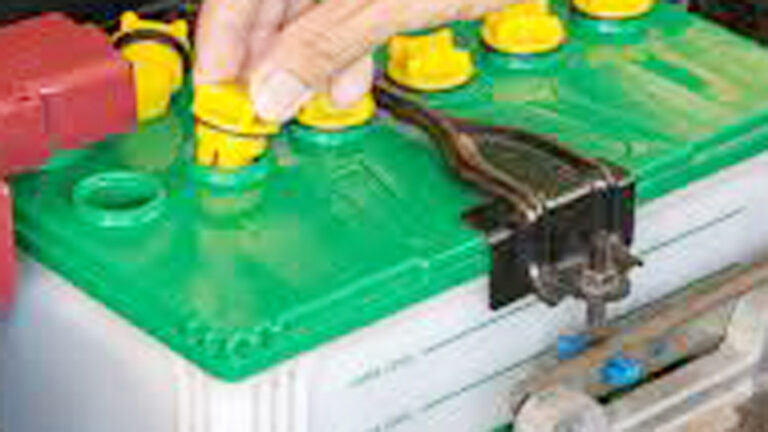
Image by kiddle.co
The Anatomy of Lead-Acid Batteries
To truly understand how these batteries function under the hood, we need to break down their core components. While newer lithium-iron-phosphate (LiFePO4) chemistries have taken over consumer electronics and some high-end energy storage systems, lead-acid remains the undisputed workhorse for high-cranking automotive applications and budget-friendly, stationary deep-cycle setups.
What It Is
A lead-acid battery is an electrochemical storage device that converts chemical energy into electrical energy using lead plates, lead dioxide, and a sulfuric acid electrolyte solution.
How It Works
The system works via a reversible chemical reaction. When the battery discharges, the lead dioxide on the positive plates and the sponge lead on the negative plates react with the sulfuric acid. This reaction produces lead sulfate and water, releasing free electrons that travel through your external circuit (such as a vehicle’s starter motor).
When you charge the battery, the process reverses: the lead sulfate is converted back into lead and lead dioxide, while the sulfuric acid concentration is restored.
When and Why It Should Be Used
Automotive Starting (SLI): Best for Starting, Lighting, and Ignition due to the immediate, high-amperage discharge capacity.
Off-grid solar and UPS systems: Ideal for budget-friendly energy storage where physical weight is not a disadvantage.
Practical, Real-World Tips
Avoid deep discharging an SLI battery: Standard automotive batteries are not designed for deep cycling. Discharging them below 50% state-of-charge multiple times will permanently degrade the plate material.
Monitor your electrolyte levels: Unless you are using a sealed maintenance-free battery, check distilled water levels at least twice a year.
Step-by-Step Breakdown: How Lead-Acid Batteries Are Made
The manufacturing process is a marvel of industrial chemistry and precision engineering. Let’s walk through the exact steps manufacturers use to build these reliable powerhouses.
1. Grid Casting and Paste Preparation
The structural backbone of the battery is the grid, which conducts electricity and holds the active chemical material. Manufacturers cast grids using lead alloys mixed with small amounts of calcium or antimony to improve mechanical strength and reduce gassing.
[Lead Ingot] -> [Melting Furnace] -> [Grid Casting Machine] -> [Lead Grids Produced]
At the same time, the active material (a mixture of lead oxide, water, sulfuric acid, and expanding agents) is mixed into a dense paste.
2. Pasting and Curing the Plates
The active paste is applied to the grids using a specialized pasting machine. Once pasted, the plates go through a precise curing process. The plates are placed in an environment with high humidity and controlled temperatures. This step oxidizes the free lead and locks the paste into the structural grid matrix.
3. Grouping and Plate Separation
Next, positive and negative plates are stacked together. To prevent the plates from touching and causing an internal short circuit, manufacturers interleave micro-porous polyethylene or PVC separators between them. These separators allow ion exchange while providing high electrical resistance.
4. Element Assembly and Welding
The plates are grouped with connecting straps to form elements. These elements are welded together via a cast-on strap (COS) process, connecting all the positive plates on one side and all the negative plates on the other. This assembly is then lowered into the polypropylene or hard rubber casing.
5. Cell Connection and Sealing
The battery casing is divided into six individual cells (each producing approximately 2.1 volts for a total of 12.6 volts). After placing the elements into each cell, manufacturers weld the inter-cell connectors through the partitions. The cover is heat-sealed to the container to prevent acid leakage.
6. Formation Charging and Quality Control
The finished, dry battery is filled with a diluted sulfuric acid electrolyte and charged for many hours. This formation charge converts the unformed active material into lead dioxide (on the positive plate) and sponge lead (on the negative plate). The battery is then tested for capacity, cold-cranking amps (CCA), and leaks before being shipped.
Comparing Battery Technologies
It is vital to know how lead-acid variants compare to other standard chemistries on the market today.
| Battery Type | Nominal Voltage | Average Cycle Life | Energy Density | Primary Application | Cost Level |
| Standard Flooded Lead-Acid | 12V (2.1V/cell) | 300–500 cycles | 30–40 Wh/kg | Automotive, Basic UPS | Budget |
| AGM (Absorbed Glass Mat) | 12V | 500–800 cycles | 35–45 Wh/kg | Powersport, Premium Vehicles | Moderate |
| Gel Cell | 12V | 500–1,000 cycles | 30–40 Wh/kg | Solar, Marine Deep-Cycle | Moderate-High |
| Lithium-ion / LiFePO4 | 12.8V | 2,000–5,000+ cycles | 100–160 Wh/kg | Off-grid, EV, RV living | High |
Battery Maintenance, Charging, and Diagnostics
Understanding battery construction is only half the battle; ensuring a long, productive lifespan requires correct maintenance procedures.
What It Is
Battery maintenance involves monitoring state-of-charge (SoC), checking terminal connections, maintaining fluid levels, and applying the correct charging profile to prevent sulfation.
How It Works
Sulfation occurs when a battery is left in a low state-of-charge. Lead sulfate crystals grow and harden on the plates, blocking chemical reactions and eventually rendering the battery unable to hold a charge. Proper charging breaks down these soft crystals through regular, multi-stage maintenance charging.
When and Why It Should Be Used
- Monthly inspection of stationary banks: Keeps cells balanced.
- Winterizing vehicles: Disconnect or put batteries on a float charger if stored for extended periods.
Practical, Real-World Tips
- Avoid tap water: Minerals in tap water will contaminate the electrolyte and short out your battery cells. Only use distilled water for flooded variants.
- Keep it clean: A mixture of baking soda and warm water neutralizes acidic corrosion on the terminal posts, preventing voltage drop and starting issues.
Step-by-Step Guide: Testing Your Battery with a Multimeter
ShutterstockExplore
Before assuming a lead-acid battery is dead, you can measure its voltage to determine its state of charge. Here is the step-by-step diagnostic process:
- Prepare the vehicle or system: Turn off the ignition and all accessories. Ensure the vehicle has sat for at least 12 hours (removing surface charge) for the most accurate reading.
- Set the multimeter: Turn your digital multimeter dial to DC voltage (V with a straight line, typically set to the 20V range).
- Connect the leads: Touch the red probe to the positive terminal ($+$) and the black probe to the negative terminal ($-$).
- Read the voltage output: * $12.6\text{ V}$ to $12.8\text{ V}$ = 100% charged.
- $12.2\text{ V}$ to $12.4\text{ V}$ = 50% charged.
- Under $12.0\text{ V}$ = Discharged or sulfated.
- Clean and evaluate: If the reading is low, clean the posts, charge with an appropriate smart charger, and re-test.
Real-World Applications
To better understand real-world battery performance, let’s look at how different users interact with battery systems.
1. Cars and Motorcycles
A standard vehicle uses a flooded or AGM lead-acid battery designed for high, short bursts of current to turn over the starter motor. Once the engine starts, the alternator recharges the battery continuously while running.
2. Off-Grid Solar Power Systems
For off-grid cabins, users typically deploy deep-cycle flooded or gel lead-acid batteries. These are built with thicker lead plates designed to endure hundreds of deep discharges and recharges without dropping off in capacity.
3. UPS (Uninterruptible Power Supply) and Backups
These batteries remain on a constant float charge, ready to supply emergency power. Using AGM-style, valve-regulated lead-acid (VRLA) batteries prevents the user from needing to add water in tight, enclosed spaces.
Common Mistakes Beginners Make
1. Using Incorrect Charging Voltages
Many DIY mechanics use a standard automotive battery charger on a deep-cycle battery without adjusting the chemistry setting. Deep-cycle batteries require slightly different absorption and float voltages to achieve a full charge without gassing. Always ensure your smart charger is set to the correct type of lead-acid battery (Wet, AGM, or Gel).
2. Neglecting Terminal Connections
Corrosion at the terminal creates high resistance, which puts unnecessary strain on your alternator or solar charge controller. Clean your terminals regularly with a wire brush.
3. Storing Batteries While Discharged
Never leave a battery sitting at 50% charge or lower over winter. Sulfation sets in quickly, and the battery may not take a charge when you attempt to use it in the spring.
Conclusion
Understanding the manufacturing and operational principles of lead-acid batteries gives you the power to manage, maintain, and troubleshoot your equipment effectively. Whether you are maintaining a daily driver, an off-grid cabin setup, or a home backup system, knowing the chemical limitations allows you to optimize your hardware.
By paying close attention to charging profiles, keeping electrolyte levels steady, and addressing sulfation early, you avoid the premature failures that plague most everyday users.
Expert Tip from the Workshop: When equalizing a flooded lead-acid bank, temporarily raise the voltage to 15.0 – 15.5 V at a low current for 2 to 3 hours to break up stubborn lead sulfate crystals—but be sure to measure electrolyte specific gravity afterward to verify cell balance.
Frequently Asked Questions
Why do lead-acid batteries leak?
Flooded lead-acid batteries can leak if the casing is cracked, or when the battery is overcharged, causing the electrolyte to boil over through the vent caps. Ensure the battery is properly secured to avoid vibration damage, and check that your charging voltage is within the manufacturer’s limit.
How many years does a lead-acid battery last?
A standard car battery lasts between 3 and 5 years depending on the climate, while deep-cycle batteries can last up to 7 years with diligent maintenance. Extreme heat accelerates active material degradation, while cold weather demands higher starting currents, stressing the plates.
Can you revive a deeply discharged lead-acid battery?
It depends on how long the battery has sat in a discharged state. If the battery has been discharged below 10.5V for several weeks, the sulfation is usually hardened and irreversible. If it has been discharged recently, a slow desulfation charge or an equalization charge may restore a portion of its capacity.