How to Check If Alkaline Battery Is Good | Simple Test
A flashlight suddenly goes dim during a power outage. The TV remote stops responding even though the batteries were replaced only a few months ago.
Situations like these leave many people wondering whether the device is faulty or if the batteries have simply reached the end of their life. That’s where knowing how to check if alkaline battery is good can save a lot of frustration.
I’ve seen people throw away perfectly usable batteries while continuing to use weak ones that can barely power a device. The problem is that battery condition isn’t always obvious. An alkaline battery may look perfectly normal on the outside while having very little usable power left inside.
Taking a few minutes to test a battery can help you avoid unnecessary replacements, reduce waste, and quickly identify the real cause of a device problem.
Whether you’re troubleshooting a remote, wireless mouse, flashlight, or other household electronics, knowing how to evaluate battery health is a useful skill that can save both time and money.
I’ll show you several simple ways to check an alkaline battery, including methods that require a multimeter and a few quick checks you can do at home. You’ll also learn how to interpret the results correctly so you can tell the difference between a healthy battery and one that’s ready for recycling.
Image by addictinglaughs
Why Battery Testing Matters in Real Life
Batteries fail at the worst times. You grab what you think is a fresh set for your flashlight during a storm, only to find it dim or dead. In vehicles or solar systems, weak cells drag down performance, shorten overall lifespan, and create safety risks like leakage or overheating.
For alkaline batteries specifically, they can leak corrosive potassium hydroxide once depleted, damaging expensive electronics.
Testing isn’t just about voltage on paper. It’s about real-world capacity under load. A battery might read okay at rest but collapse when your device draws current.
I’ve seen this in everything from power tools to UPS systems. Proper checking helps you sort mixed batches, extend usable life, and make smarter choices between alkaline, lithium, and rechargeables.
Understanding Alkaline Batteries: Basics and Chemistry
Alkaline batteries use zinc as the anode and manganese dioxide as the cathode, with an alkaline electrolyte (usually potassium hydroxide). This gives them a nominal 1.5V per cell and decent energy density for their price and size.
Fresh alkalines often start around 1.5–1.65V open-circuit. As they discharge, voltage drops gradually at first, then more sharply toward the end. Unlike lithium batteries, which hold voltage longer, or lead-acid, which have different curves, alkalines are best for moderate to low-drain applications. High-drain devices (digital cameras, motorized toys) eat through them faster.
Key specs to know:
- Voltage: 1.5V nominal.
- Capacity: Typically 2000–3000 mAh for AA, depending on brand and load.
- Shelf life: 5–10 years unopened, but self-discharge happens over time.
They’re not rechargeable in standard form (though specialized rechargeable alkalines exist with limitations). Mixing old and new, or different brands, can cause uneven discharge and leakage.
Simple No-Tool Methods to Check Alkaline Batteries
When you’re in a hurry without a multimeter, quick field tests work surprisingly well.
The Drop Test (Bounce Test): Hold the battery 2–4 inches above a hard surface (like a table or concrete), negative (flat) end down, and drop it. A good, fresh alkaline will hit with a thud and often stay upright or barely bounce. A depleted one bounces several times like a rubber ball because the internal materials have changed and gas buildup makes it lighter and springier.
This distinguishes new from used effectively but isn’t perfect for partially drained cells. I use it all the time when sorting a junk drawer. Don’t use it on lithium or rechargeable cells—it doesn’t work the same.
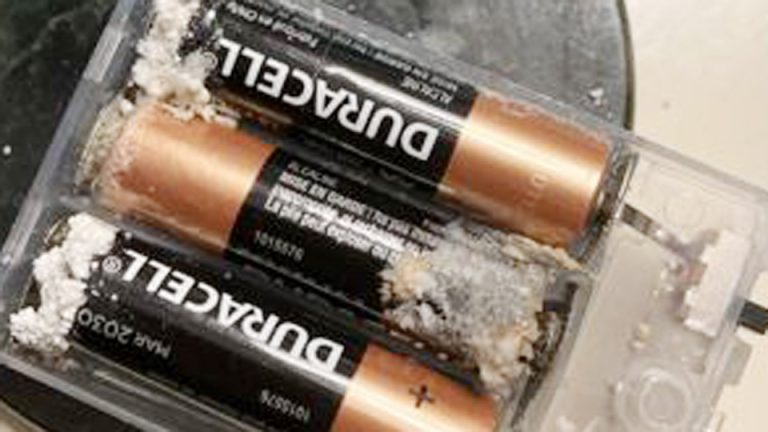
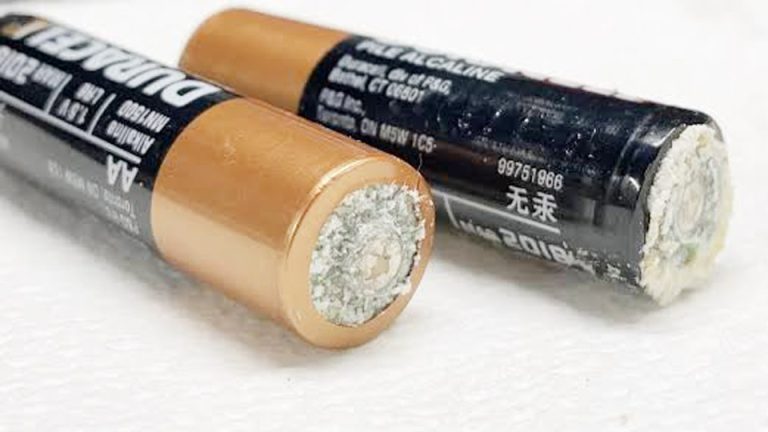
Visual and Physical Inspection: Look for bulging, leakage (white or crusty powder), or corrosion on terminals. Swollen batteries are unsafe—dispose of them properly. Check expiration dates printed on the battery.
These quick checks catch obvious duds but for accuracy, move to electrical testing.
Using a Multimeter: The Reliable Way to Test Voltage
A basic digital multimeter (under $20 at any hardware store) is my go-to tool. Here’s the step-by-step:
- Set the multimeter to DC Voltage, 2V or 20V range.
- Touch the red probe to the positive (+) end (bump) and black to the negative (flat).
- Read the voltage.
Interpretation for alkaline AA/AAA:
- 1.5–1.65V: Fresh or nearly new.
- 1.3–1.5V: Still usable for most devices.
- 1.2–1.3V: Marginal—good for low-drain items like remotes, but may fail under load.
- Below 1.2V (especially <1.0V): Dead or nearly dead. Time to replace.
Open-circuit voltage (no load) gives a decent snapshot but doesn’t tell full capacity. A battery at 1.4V might still have decent life in a clock but die quickly in a flashlight.
Pro Tip from the Shop: Always test under load for real insight. Connect a resistor (around 100 ohms for AA) or the actual device and measure voltage drop. Significant sag means weak capacity.
Dedicated Battery Testers and Load Testing
Universal battery testers with a built-in load are even better for quick checks. Insert the battery, and the meter shows green (good), yellow (weak), or red (replace). They apply a small load, simulating real use better than open-circuit measurement.
For serious diagnostics, especially if you stockpile batteries, a capacity tester or battery analyzer discharges at a controlled rate and measures mAh delivered. This is overkill for casual users but invaluable for solar or UPS setups where reliability counts.
Common Mistakes When Testing and Using Alkaline Batteries
I’ve made (and seen) these errors repeatedly:
- Relying only on voltage without load: A battery can read 1.4V but collapse immediately under current.
- Mixing old and new batteries: Causes imbalance and faster failure.
- Leaving batteries in unused devices: Leads to leakage as they self-discharge.
- Storing in hot or humid places: Accelerates degradation.
- Trying to recharge standard alkalines: Can cause leaks, overheating, or rupture.
- Ignoring temperature effects: Cold weather drastically reduces performance and apparent capacity.
For broader battery work, the same rules apply—never mix chemistries in series/parallel without careful matching.
Battery Types Comparison: Alkaline and Beyond
While this article centers on alkaline testing, understanding the ecosystem helps you choose right.
Alkaline:
- Pros: Cheap, widely available, good shelf life, stable 1.5V.
- Cons: Single-use, prone to leakage when dead, poor for high-drain or extreme temps.
Lithium (Primary, e.g., AA Lithium):
- Pros: Lighter, longer shelf life (10+ years), better cold performance, higher capacity, consistent voltage.
- Cons: More expensive, not rechargeable.
Rechargeable NiMH:
- Pros: Cost-effective over time (hundreds of cycles), lower environmental impact.
- Cons: Lower initial voltage (~1.2V), higher self-discharge, need charger.
Lead-Acid/AGM/Gel (Automotive, Solar, UPS):
- Used in cars, motorcycles, deep-cycle solar. Test with hydrometer (specific gravity) or load tester for cranking amps. Voltage: ~12.6V+ healthy for 12V battery.
Lithium-Ion/LiFePO4:
- Dominant in EVs, solar storage, power tools. Require BMS for safety. Voltage per cell ~3.2–3.7V nominal. Far longer cycle life than lead-acid.
| Battery Type | Nominal Voltage | Best Uses | Lifespan/Cycles | Leak Risk | Cost per Use |
|---|---|---|---|---|---|
| Alkaline (AA) | 1.5V | Low-medium drain household | Single use | High when dead | Low upfront, high long-term |
| Lithium Primary | 1.5V | High-drain, extreme temps | Single use, long shelf | Low | Higher |
| NiMH Rechargeable | 1.2V | Frequent use devices | 500–1000+ cycles | Low | Low long-term |
| Lead-Acid/AGM | 12V | Cars, solar deep cycle | 200–500 cycles | Moderate | Moderate |
| LiFePO4 | 3.2V/cell | Solar, EV, backup | 2000–5000+ cycles | Low | High upfront, best value |
Choose based on duty cycle. For occasional remotes, alkaline is fine if you test and rotate stock. For frequent use, invest in rechargeables.
Charging, Maintenance, and Storage Best Practices
Alkalines aren’t designed for charging, but proper care of all batteries overlaps:
- Store at cool room temperature (around 50–70°F), dry, away from metal objects.
- For rechargeables or lead-acid/lithium systems, use appropriate smart chargers that prevent overcharge.
- In vehicles: Check alternator output and use trickle chargers for long-term storage.
- Solar/deep-cycle: Equalize charges periodically, monitor electrolyte if flooded lead-acid.
- Rotate stock: Use oldest first (FIFO).
Voltage and current ranges matter. For 12V lead-acid, bulk charge around 14.4V. Always match charger to chemistry.
Step-by-Step: Testing in Different Scenarios
Household Devices: Remove batteries, test individually. Replace all in a set if any are weak.
Power Tools/Electronics: Use load testing. Weak cells cause inconsistent performance.
Solar/UPS Backup: For small alkaline-powered sensors, test regularly. For main banks, use proper analyzers or hydrometers.
Car/Motorcycle: Load test the starting battery. Voltage under 12.4V (resting) signals issues.
Troubleshooting Weak Performance:
- Device sluggish? Test batteries under load.
- Intermittent failure? Check for corrosion, loose contacts.
- Overheating? Stop use immediately—safety risk.
Safety Considerations Across Battery Types
Alkaline leakage is caustic—clean with vinegar or baking soda solution, wear gloves. Never puncture or incinerate. For lithium, avoid short circuits or extreme heat. In lead-acid, watch for hydrogen gas (explosion risk). Always dispose responsibly through recycling programs.
Common pro mistake: Assuming “dead” alkalines are harmless. They can still leak years later.
Real-World Examples from Cars to Solar
In my experience, a customer’s car wouldn’t start after sitting—weak battery from parasitic drain. Testing and a trickle charger fixed it. In off-grid solar, mismatched or untested cells in a bank reduced capacity dramatically. For everyday users, testing alkalines means reliable smoke detectors and flashlights when needed most.
Power tools with weak alkalines (wrong choice anyway) lose torque. Switching to lithium packs changed the game.
Practical Recommendations for Longevity
- Buy reputable brands; generics often underperform.
- For high-use: Stock NiMH or lithium rechargeables with a good charger.
- Maintenance routine: Test batteries every 6–12 months in storage. Check vehicle batteries seasonally.
- Compatibility: Don’t mix types or capacities.
- For solar: Size banks properly, use charge controllers.
Key Takeaways for Confident Battery Management
Testing alkaline batteries—whether with a simple drop, multimeter, or dedicated tool—gives you control over your devices and prevents waste. Understanding voltage ranges, load behavior, and chemistry differences equips you to handle household needs as well as automotive, solar, or backup systems.
You now know how to spot good cells, avoid leakage disasters, and choose the right type for the job. The biggest expert tip? Treat batteries as a system. Test regularly, maintain connections clean, and never let a single weak cell drag down the rest. A few minutes checking today saves hours of frustration tomorrow.
FAQ
How accurate is the drop test for alkaline batteries?
It’s a solid quick check to separate fresh from depleted ones. Good batteries thud and stay put; bad ones bounce. It’s not precise for partial charge but great for sorting mixed batches in the field.
Can I recharge alkaline batteries?
Standard disposable alkalines are not meant for recharging. It risks leakage, overheating, or explosion. Use proper rechargeable NiMH or lithium alternatives instead.
What voltage means an AA alkaline battery is bad?
Below about 1.2V open-circuit is usually too weak for reliable use. Under load, any significant drop below 1.3–1.4V indicates it’s time to replace.
Why do alkaline batteries leak and how do I prevent it?
Leakage happens when depleted or stored long-term as chemicals react. Remove batteries from unused devices, store cool and dry, and test/replace before full discharge.
Are lithium batteries better than alkaline for everyday use?
For high-drain, cold weather, or long shelf life, yes. Alkalines suffice for low-drain, budget needs. Test and match to your application for best results.