How to Charge Multiple 12V Batteries Safely & Extend Life
A power outage hits, and your backup battery bank doesn’t last nearly as long as expected. Or maybe you’ve got multiple 12V batteries in an RV, solar setup, boat, or off-grid system and you’re wondering why some batteries seem fully charged while others are struggling.
Situations like these often lead to one important question: how to charge multiple 12V batteries correctly without damaging them.
Many people assume it’s as simple as connecting all the batteries to a charger and letting it run. In reality, the charging method you use can affect battery lifespan, charging efficiency, and overall system performance.
A mistake in wiring or charger selection can leave some batteries undercharged, overcharged, or aging much faster than the rest.
Getting it right matters for more than just convenience. Proper charging helps prevent premature battery failure, reduces replacement costs, and ensures reliable power when you need it most.
Whether you’re working with lead-acid, AGM, gel, or lithium batteries, understanding the correct setup can save a lot of frustration down the road.
I’ll explain the safest and most effective ways to charge multiple 12V batteries, the common mistakes to avoid, and the practical steps that help keep your battery bank performing at its best for years to come.

Image by ecoflowclub
Understanding Battery Configurations: Series vs Parallel
Before touching a charger, you need to know how your batteries are connected. This determines voltage, capacity, and charging approach.
Parallel Connections keep the voltage the same (12V) while adding capacities. Connect positive to positive and negative to negative. Two 100Ah batteries in parallel give you 12V at roughly 200Ah total capacity. This is perfect for cars, RVs, or solar systems needing more runtime without higher voltage.
In parallel, the pack acts like one big battery. Current splits between them (ideally evenly if wired properly), and you charge at 12V. Use heavy-gauge cables of equal length to minimize imbalance—voltage drop can cause one battery to work harder.
Series Connections add voltages while keeping capacity the same. Connect positive of one to negative of the next. Two 12V batteries in series create a 24V system, common for trolling motors or larger inverters. Capacity stays at the rating of a single battery.
Charging in series requires a 24V charger or careful individual charging to avoid imbalance. One weak battery drags down the whole string.
Series-Parallel combines both for larger banks, like four batteries in a 2S2P setup (24V with doubled capacity). Balance is critical here.
Real-World Tip: Always match batteries in a bank by type, age, and capacity as closely as possible. Mixing a new battery with an old one leads to premature failure.
Battery Types: Which 12V Batteries Are You Working With?
Different chemistries behave differently when charging multiples. Here’s what I’ve learned over years of swapping them in vehicles and solar arrays.
Flooded Lead-Acid (Wet Cell): Traditional, affordable, and serviceable. They need watering and venting. Charging voltages: bulk/absorption around 14.4-14.9V, float 13.1-13.4V. They’re forgiving but prone to sulfation if left discharged.
AGM (Absorbed Glass Mat): Sealed, maintenance-free, vibration-resistant. Great for vehicles and marine use. Absorption ~14.4-14.7V, float ~13.2-13.8V. They handle higher charge currents better than flooded but hate overcharging.
Gel: Similar to AGM but with gelled electrolyte. More sensitive to high voltages—stick to lower absorption around 14.1-14.4V. Excellent for deep-cycle but charge slower.
Lithium-Ion (LiFePO4): Modern game-changer for solar, EVs, and high-cycle applications. Lighter, higher usable capacity (80-100% vs. 50% for lead-acid), and 2000-5000+ cycles. Charging: 14.2-14.6V absorption, often no float or very low (13.5V). They have built-in BMS for protection but require compatible chargers.
Comparison Table (based on typical 100Ah 12V deep-cycle examples):
- Lead-Acid (Flooded/AGM): Cost $150-300, Weight ~60-70 lbs, Usable Capacity ~50%, Cycles 300-800, Charge Time Moderate, Maintenance Higher.
- Gel: Similar cost/weight to AGM, better for constant low discharge, more temperature sensitive.
- LiFePO4: Cost $400-800+, Weight ~25-35 lbs, Usable Capacity 90-100%, Cycles 2000-5000+, Fast Charge, Low Maintenance, Built-in BMS.
Pros and Cons Summary:
- Lead-acid: Cheap upfront, widely available, but heavier, shorter life, needs maintenance.
- Lithium: Expensive initially but pays off in longevity, efficiency, and weight savings. Ideal for solar/off-grid.
In mixed banks, avoid paralleling lead-acid with lithium due to different voltage curves and charging profiles.
Why Proper Charging Matters: Lifespan, Costs, and Safety
Batteries fail from undercharging (sulfation in lead-acid), overcharging (gassing, heat, plate damage), or imbalance in multi-battery setups. A single bad charge cycle can cut lifespan significantly.
I’ve seen $500 solar banks ruined because someone used the wrong charger on a parallel pair. Safety risks include hydrogen gas explosions (lead-acid), thermal runaway (lithium, though rare with good BMS), acid leaks, and electrical shorts.
Charging multiple batteries takes longer but must be even. Uneven charging leads to some batteries boiling while others stay undercharged.
Step-by-Step: How to Charge Multiple 12V Batteries in Parallel
This is the most common setup for 12V systems.
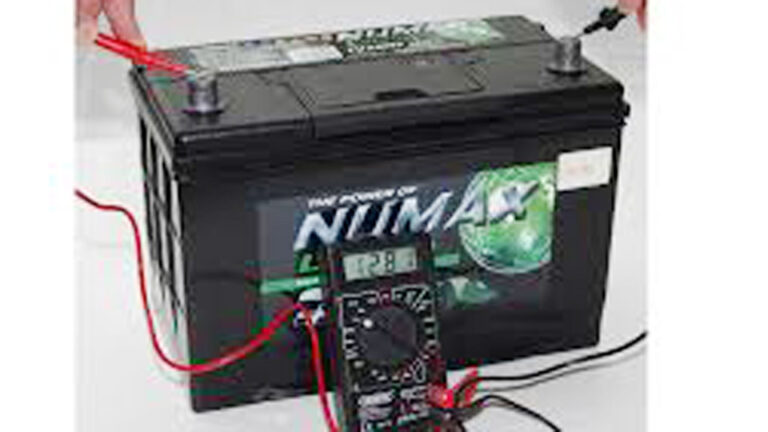
- Inspect and Prepare: Check each battery for damage, clean terminals, measure voltage individually. They should be within 0.1-0.2V of each other. Top off flooded cells with distilled water.
- Connect in Parallel: Use equal-length cables. Positive to positive, negative to negative. For better balance in larger banks, use a “bus bar” or connect charger leads to opposite ends of the bank.
- Choose the Right Charger: Smart charger with multi-stage (bulk, absorption, float) and battery-type settings. For a 200Ah parallel bank, aim for 20-40A charger. Match profile: lead-acid vs. lithium.
- Connect Charger: Positive to positive end, negative to negative end. Set to 12V mode.
- Charge and Monitor: Let it run. Watch for heat, unusual smells, or voltages. Lithium charges faster; lead-acid needs full absorption phase (hours).
- Disconnect and Test: Once float stage, disconnect. Let rest and check individual voltages.
Pro Insight: For large parallel banks, use a charger with temperature compensation.
Charging in Series: Special Considerations
For 24V systems:
- Prefer charging each battery individually first to balance SOC.
- Then parallel them temporarily, charge as a 12V bank, let equalize, then reconnect in series and use a 24V charger.
- Or use a single 24V charger matched to the total voltage.
Never mix mismatched batteries in series—imbalance kills them quickly.
Charging Methods and Equipment
- Smart Chargers: Best choice. They adjust automatically and prevent overcharge.
- Alternator Charging: Fine for vehicles but add a DC-DC charger or battery isolator for multiple banks to protect the alternator and ensure proper profiles, especially with lithium.
- Solar Controllers: MPPT preferred. Set correct absorption/float voltages.
- Trickle/Maintainers: Great for storage.
Voltage and Current Ranges (approximate at 77°F/25°C):
- Flooded Lead-Acid: Absorption 14.4-14.9V, Float 13.1-13.4V.
- AGM: Absorption 14.4-14.7V, Float 13.2-13.8V.
- Gel: Absorption 14.1-14.4V.
- LiFePO4: Absorption 14.2-14.6V, Float optional ~13.5V.
Current: 10-20% of Ah capacity for lead-acid (e.g., 10-20A for 100Ah), higher for lithium (up to 0.5C or more with good BMS).
Real-World Applications
Cars and Motorcycles: Dual battery setups (starting + accessory) often parallel. Use a battery isolator or smart charger.
Solar and Off-Grid: Parallel banks for capacity. I’ve set up 400-800Ah 12V systems—balance wiring and regular equalization (for lead-acid) are key.
UPS/Backup: Series for higher voltage or parallel for runtime. Reliability matters most.
Power Tools and Electronics: Smaller banks—keep matched and charged promptly.
Maintenance Routines to Maximize Lifespan
- Test monthly with a multimeter or load tester.
- Clean terminals, apply dielectric grease.
- For flooded: Check electrolyte levels.
- Store fully charged in cool, dry place. Recharge every 1-3 months. Lithium prefers 40-60% for long storage.
- Avoid deep discharges below 50% for lead-acid.
Common Mistakes and How to Avoid Them
- Mixing old/new or different types: Causes imbalance.
- Wrong charger voltage/profile: Over/undercharge.
- Poor wiring: Uneven charging.
- Ignoring temperature: Heat kills batteries.
- Leaving on charger indefinitely with non-smart units.
- Charging in extreme cold/hot without compensation.
I’ve fixed many systems where someone paralleled mismatched AGMs—one took all the current.
Troubleshooting Charging Issues
- Battery not charging: Check connections, fuses, voltage mismatch.
- Overheating: Reduce current, check for internal shorts.
- Uneven voltages in bank: Balance by individual charging.
- Charger faults: Match to chemistry.
Use a good hydrometer for flooded batteries or Bluetooth BMS monitor for lithium.
Safety First: Non-Negotiables
Wear gloves and eye protection. Charge in ventilated areas. Have fire extinguisher (Class C or ABC) nearby, especially for lithium. Never charge frozen batteries. Disconnect loads during charging if possible. Monitor constantly for first few charges on new setups.
Choosing and Upgrading Your Battery Setup
Consider total energy needs, cycle frequency, weight, and budget. Lithium shines for frequent deep cycling; lead-acid for occasional use on a budget.
Practical Takeaways for Confident Battery Management
You’ve now got the knowledge to handle multiple 12V batteries across cars, solar, or backups. Match your batteries, use the right configuration and charger, monitor actively, and maintain consistently. This prevents most failures and stretches every dollar invested.
For any new or suspect multi-battery bank, fully charge each battery individually to 100% first, then connect and top off as a pack. This equalizes state-of-charge better than anything else and catches weak cells early.
FAQ
Can I charge two different capacity 12V batteries in parallel?
Yes, if same voltage, chemistry, and age, but it’s not ideal. The smaller one may charge faster and risk overcharge while the larger catches up. Monitor closely or charge separately.
How long does it take to charge multiple 12V batteries?
Depends on capacity and charger amperage. A 200Ah parallel lead-acid bank with a 20A charger might take 10-15 hours from 50% discharge. Lithium is faster. Factor in absorption time.
Is it safe to leave a smart charger on multiple batteries indefinitely?
With a quality multi-stage smart charger matched to the chemistry, yes—float mode maintains safely. But inspect periodically.
What’s the best way to charge batteries in series for a 24V system?
Use a 24V charger or balance by individually charging first. Avoid cheap single chargers without proper voltage matching.
How often should I check and maintain my multi-battery setup?
Monthly voltage tests, quarterly deep inspections, and after heavy use. For storage, recharge every 1-3 months.