How to Troubleshoot a Solar Battery System Fast
The power goes out at night, your inverter switches on, and within minutes the entire backup system shuts down. The solar panels looked fine during the day, but now the batteries won’t hold enough charge to run even basic appliances.
Situations like this are exactly why people search for how to troubleshoot a solar battery system before a small issue turns into an expensive replacement.
Solar battery problems rarely appear all at once. Sometimes the batteries charge too slowly, sometimes the inverter throws warning lights, and other times the system simply stops delivering backup power when you need it most.
I’ve seen loose connections, incorrect charging settings, weak batteries, and even simple maintenance mistakes create major performance issues.
The frustrating part is that many solar system owners replace batteries too early without checking the real cause. A bad cable, faulty charge controller setting, or over-discharged battery can mimic serious battery failure and cost a lot of money if diagnosed incorrectly.
I’ll walk you through the most common solar battery problems, how to identify them step by step, and the practical fixes that actually work in real-world setups. You’ll also learn how to spot warning signs early so your system stays reliable during outages and heavy daily use.
Image by aforenergy
Understanding Your Solar Battery System First
Before touching anything, you need to know what kind of battery bank you’re dealing with. This single step eliminates most wrong diagnoses.
Common Solar Battery Types
Flooded Lead-Acid: Traditional, cheapest upfront, requires regular maintenance (distilled water top-ups). Best for stationary installations where you can check them monthly.
AGM (Absorbed Glass Mat): Sealed, maintenance-free, handles vibration better, charges faster than flooded. Popular in RVs and boats.
Gel: Similar to AGM but more sensitive to charging voltage. Excellent deep-cycle performance but hates overcharging.
Lithium-Ion (especially LiFePO4): Highest efficiency, longest lifespan (often 10+ years), lightweight, but more expensive upfront. Becoming the standard for serious solar installs.
Each type behaves differently when something goes wrong. A lithium system at 12.8V might be fine, while the same voltage on a lead-acid bank means it’s nearly dead.
Key Measurements Every Solar Owner Should Know
- Voltage: Tells you state of charge right now.
- Amp-hours (Ah): How much energy the battery can theoretically store.
- Watt-hours (Wh): Real usable energy (Ah × Voltage).
- Depth of Discharge (DoD): How far you can safely drain the battery. Lead-acid hates going below 50%, lithium can go to 80-90%.
Step-by-Step Troubleshooting Process
Step 1: Safety First
Turn off the inverter, disconnect the charge controller from the panels, and wear eye protection and gloves. Batteries can deliver massive current and release explosive gases (lead-acid) or catch fire (lithium if damaged).
Step 2: Check the Basics
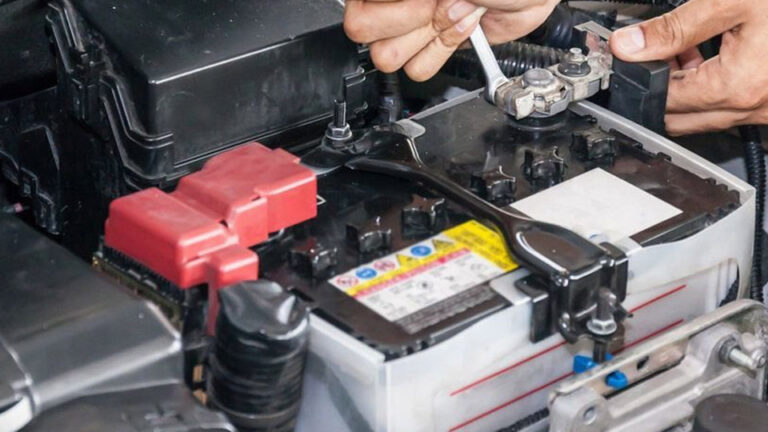
Start with the obvious — I can’t tell you how many “dead” systems I’ve fixed by tightening a loose terminal.
- Inspect all connections for corrosion, looseness, or burnt smell.
- Look for swollen or leaking batteries.
- Check fuses and breakers between panels, charge controller, batteries, and inverter.
- Verify solar panels are actually producing power (use a multimeter in direct sunlight).
Step 3: Measure Battery Voltage
Use a quality digital multimeter. Test each battery individually if you have a bank of several.
Typical Resting Voltages (after 4+ hours no charge/discharge):
- 12V Lead-Acid/AGM/Gel:
- 12.7V+ = 100%
- 12.4V = ~75%
- 12.2V = ~50%
- 12.0V = ~25%
- Below 11.8V = critically low
- 24V System: Double the numbers
- 48V System: Multiply by 4
For lithium (LiFePO4), voltage is flatter. 13.0V might still mean 30-40% on some models — always check your specific battery’s voltage curve.
Common Solar Battery Problems and Fixes
Problem: Batteries Not Charging
This is the #1 complaint I hear.
Possible causes:
- Charge controller failure or wrong settings
- Solar panels dirty, shaded, or damaged
- Incorrect charge voltage
- Battery already at full capacity (but showing wrong voltage)
- Temperature compensation issues
How to diagnose:
- Check charge controller display. Is it in Bulk, Absorption, or Float stage?
- Measure voltage coming from panels — should be higher than battery voltage.
- Test with a different charge controller if possible.
Real fix examples:
I once found a customer’s MPPT controller set to “flooded” mode while running AGM batteries. The absorption voltage was too high, causing gassing and water loss. Lowering it to 14.4V fixed the issue immediately.
Problem: Rapid Battery Drain
Your system worked fine for months, now it dies overnight.
Common reasons:
- Parasitic loads (inverter idle draw, phantom loads from appliances)
- Ground fault or short somewhere in the wiring
- One weak battery dragging down the whole bank
- Sulfation on lead-acid batteries
Testing method:
Disconnect everything from the batteries except the multimeter. Monitor voltage drop over 30 minutes. Anything more than 0.1V suggests a drain.
Problem: Batteries Overheating
Very dangerous, especially with lithium.
- Overcharging (wrong settings)
- High ambient temperature + heavy cycling
- Internal short developing
- Poor ventilation
Action: Immediately disconnect and let cool. Never charge a hot lithium battery.
Problem: Inconsistent Performance Between Batteries in a Bank
Batteries in series or parallel should stay balanced.
- Measure voltage on each battery under load and at rest.
- Big differences (>0.2V on 12V batteries) means imbalance or failing cell.
- Use a battery balancer or active BMS on lithium banks.
Battery Type Comparison for Solar Use
| Battery Type | Lifespan (cycles) | Efficiency | Cost per kWh | Maintenance | Best For | Major Drawback |
|---|---|---|---|---|---|---|
| Flooded Lead-Acid | 500-800 | 75-85% | Lowest | High | Budget stationary | Watering, ventilation |
| AGM | 800-1200 | 85-95% | Medium | Low | RV, boats, moderate use | Sensitive to overcharge |
| Gel | 700-1000 | 80-90% | Medium | Low | Deep cycle, stable temps | Poor high-current performance |
| LiFePO4 | 3000-6000+ | 95-99% | Higher | None | Daily cycling, off-grid | Upfront cost, BMS issues |
Proper Charging Methods and Settings
This is where most people destroy batteries.
Lead-Acid Family (12V):
- Bulk: 14.4-14.8V
- Absorption: 14.4-14.7V (2-4 hours)
- Float: 13.2-13.8V
Lithium (LiFePO4) 12V:
- Bulk/Absorption: 14.2-14.6V (many prefer 14.4V)
- Float: 13.5-13.6V or disable float entirely
Never use a standard automotive charger on deep-cycle solar batteries. The voltage profiles are completely different.
Temperature matters. Most controllers have temperature compensation. In cold weather (<50°F), increase voltage slightly. In hot weather (>85°F), reduce it.
Maintenance Routines That Actually Work
For lead-acid:
- Check water levels monthly (use distilled only)
- Clean terminals with baking soda solution
- Equalize charge every 60-90 days (carefully!)
- Keep batteries at 60-80°F when possible
For lithium:
- Monitor BMS data via Bluetooth apps
- Avoid storing below 20% or above 90% for long periods
- Keep firmware updated
- Balance cells regularly if not automatic
Storage and Winterization Tips
Never let lead-acid sit discharged. A sulfated battery is almost impossible to recover fully. For winter storage:
- Charge to 100%
- Disconnect from all loads and chargers
- Store in cool, dry place
- Check voltage every 30-45 days and top up if needed
Lithium can handle partial states of charge better but still prefers 50-70% for long-term storage.
When to Replace Batteries
Don’t wait until total failure. Replace when:
- Capacity drops below 70-80% of original
- One battery in the bank consistently underperforms
- Physical damage or swelling appears
- You notice dramatically reduced runtime
Real-World Solar Battery Scenarios
Off-Grid Cabin Example:
A friend’s 48V 400Ah LiFePO4 bank was only giving 2-3 days of autonomy instead of 5. Turned out the charge controller was set to 56.0V absorption instead of 57.6V. Small change, massive difference in daily energy harvest.
RV Solar Setup:
AGM batteries dying after 18 months. Owner was using a cheap PWM controller and parking under trees. Upgraded to MPPT and added more panel tilt — problem solved.
Safety Considerations You Can’t Ignore
- Lead-acid: Hydrogen gas explosion risk — ventilate!
- Lithium: Thermal runaway risk — use proper BMS, never bypass protection
- Always use appropriate wire gauge and fuses
- Keep children and pets away from battery banks
- Have a fire extinguisher rated for lithium fires (Class D) nearby
Advanced Troubleshooting Techniques
- Load Testing: Use a carbon pile tester or inverter with known loads
- Capacity Testing: Discharge at C/20 rate and measure actual Ah delivered
- Infrared Thermometer: Check for hot cells under load
- Data Logging: Many modern BMS and charge controllers log history — review it
Practical Recommendations
- Buy a good multimeter and clamp meter — they pay for themselves quickly.
- Label every wire and connection.
- Keep a logbook of voltage readings and maintenance.
- Match batteries by age, capacity, and brand in the same bank.
- Consider a battery monitor with shunt for accurate state of charge.
Final Takeaway
After troubleshooting hundreds of solar battery systems, the pattern is clear: most failures come down to three things — wrong charging parameters, poor connections, or ignoring early warning signs.
Once you understand how your specific battery chemistry behaves and set your equipment accordingly, these systems become remarkably reliable.
Treat your battery bank like a living thing that needs the right food (charging voltage), rest (proper float), and environment (temperature). Respect its limits instead of pushing them, and it will reward you with years of dependable service.
FAQ
How do I know if my solar battery is bad?
Measure resting voltage after several hours of no activity. If it’s significantly lower than others in the bank or won’t hold a charge after proper charging, it’s likely failing. Capacity testing gives the definitive answer.
Can I mix different battery types in one solar system?
Generally no. Never mix lead-acid with lithium, and even different ages or brands of the same type cause imbalance. It leads to premature failure of the entire bank.
Why is my solar charge controller not charging the batteries?
Check panel voltage (must be higher than battery voltage), controller settings, connections, and fuses. Also ensure the controller isn’t in a protective shutdown mode due to over-temperature or error.
How long should solar batteries last?
Flooded/AGM: 3-7 years with good care. Quality LiFePO4: 10-15+ years. Daily deep cycling and improper charging are the biggest killers.
Is it worth upgrading from lead-acid to lithium for solar?
For most people doing daily cycling or living off-grid, yes. The higher efficiency, longer life, and lighter weight usually pay back the extra cost within 3-5 years through reduced replacement and better performance.